Vinyl vs. Wood Fencing in New Hampshire: Which Fits Your Yard?
Two ways to make your yard your own. Compare upkeep, privacy and the details that shape your fence estimate.
Start with how you want to live with your fence.
Choosing between vinyl and wood fencing in New Hampshire usually comes down to three priorities: the look you want, the upkeep you are willing to do and the cost of the complete installation. Both materials can create backyard privacy. The right choice depends on the panel style, your property and what matters most to you after installation day.
Vinyl is a practical starting point if you want a consistent finish without routine staining or painting. Wood is worth comparing if you prefer natural grain and want the option to change its appearance with a suitable stain or paint. For a useful fence estimate, compare both materials using the same length, height and gate layout.
Vinyl vs. wood fencing at a glance.
| Your priority | Vinyl fencing | Wood fencing |
|---|---|---|
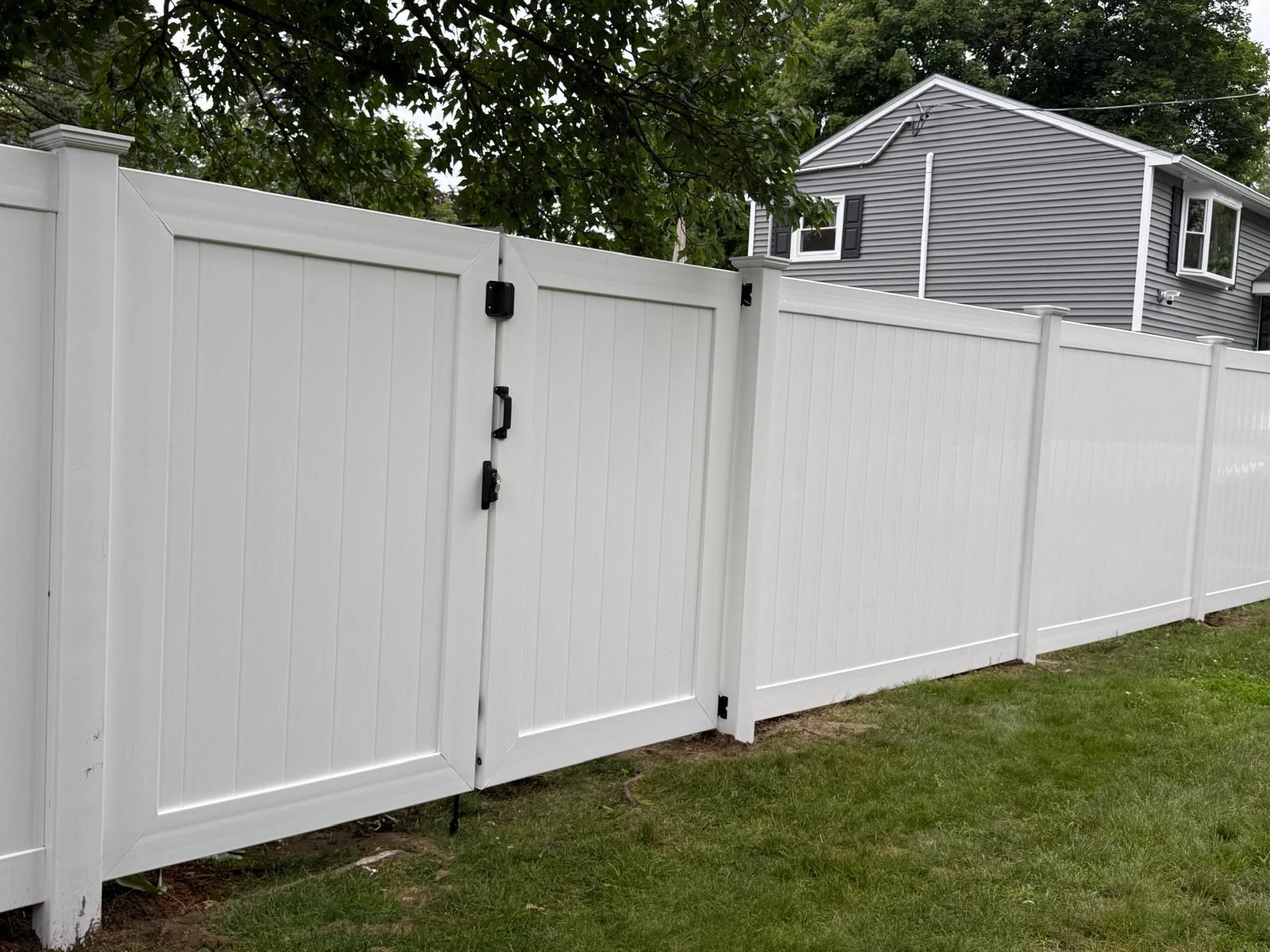
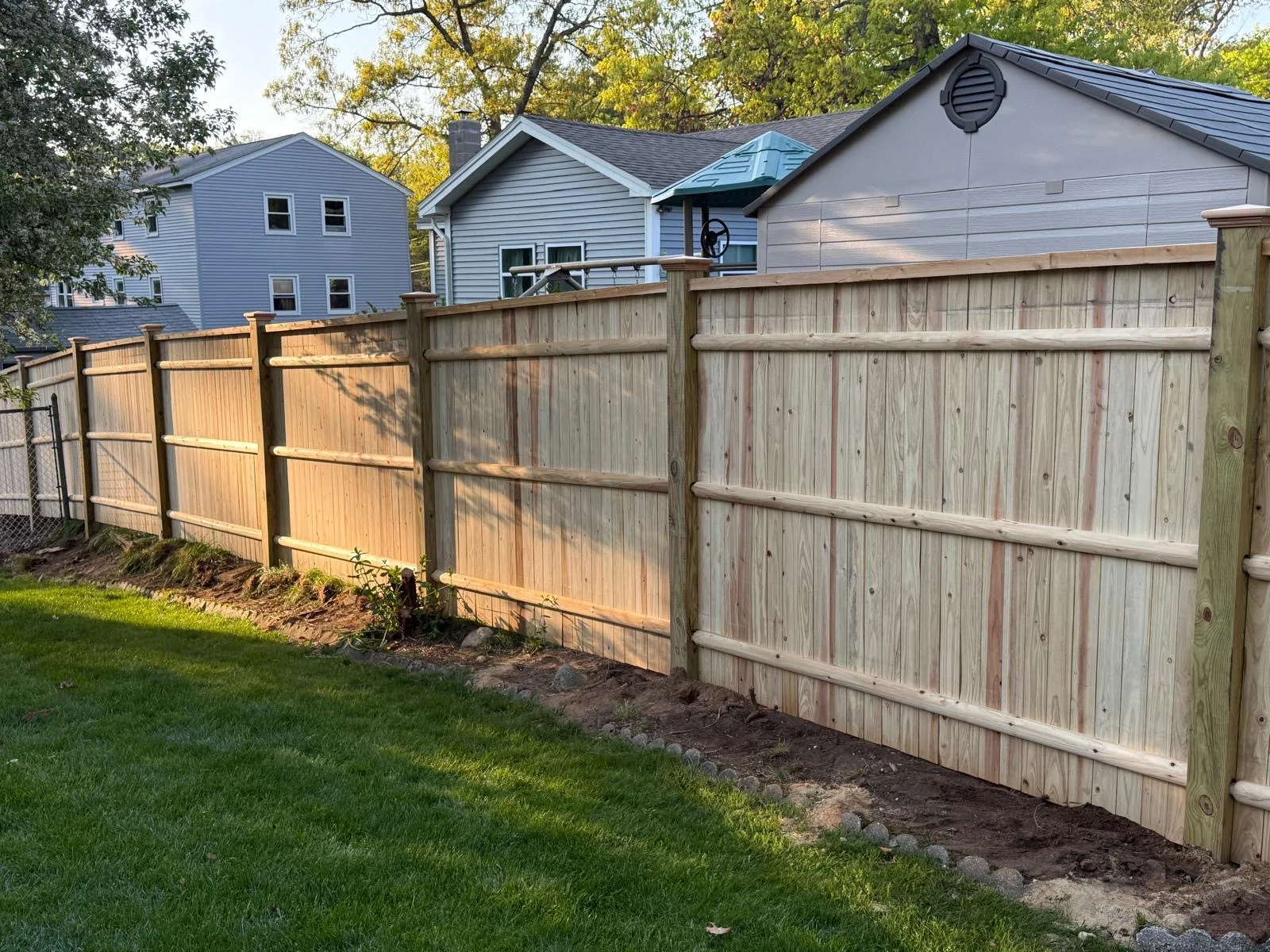
| Appearance | Consistent profiles, classic colors and selected woodgrain finishes. | Natural grain and variation; can be stained or painted. |
| Routine care | Cleaning and periodic checks of posts, panels and hardware. | Cleaning, condition checks and finish renewal when needed. |
| Privacy | Solid privacy, semi-privacy and decorative top options. | Privacy and picket layouts, including stockade and flat top styles. |
| Budget | Compare the specific style and finish, especially classic white versus colors. | Compare wood type, board layout and any finishing work. |
| Site planning | Panel layout, grade changes, post installation and gate clearances matter. | Board layout, grade changes, post installation and gate clearances matter. |
Which costs less to install in New Hampshire?
A material name alone does not tell you the installed price. A straight fence line with one walking gate is a different project from a sloped yard with several corners, an existing fence to remove and a wide double gate. Comparing an unfinished wood fence with a premium woodgrain vinyl fence also gives you a different answer than comparing two basic privacy designs.
Ask for estimates with the same scope: total fence length, finished height, number and width of gates, removal work and site access. For wood, ask whether staining or sealing is included or planned separately. For vinyl, confirm the exact color and profile. At Eagle Fencing, Classic White V300 privacy is a useful option to include when comparing a budget-conscious vinyl installation; colored and woodgrain finishes have different pricing.
Then consider what you want to spend on upkeep. If you plan to maintain a particular wood color, account for future finish renewal as well as the installation. Get a property-specific quote rather than relying on a general price per foot that may leave out gates, removal or difficult ground.
Maintenance: cleaning vinyl versus caring for wood.
Vinyl: less finishing work, with regular checks.
Vinyl does not need routine painting or staining. Dirt and surface buildup still need attention, particularly along shaded fence lines or near landscaping. Illusions Fence recommends a non-abrasive cleaner and a soft cloth or brush for normal care. Follow the instructions for your specific product before using a cleaner or washing equipment. Read the manufacturer’s care guidance.
Periodically check the gate latch, hinges, posts and panel connections. Low maintenance still includes making sure the fence and gates are working as intended.
Wood: natural character with a finish plan.
Wood outdoors is affected by water, sunlight and weathering. The USDA Forest Products Laboratory explains that suitable finishes can help protect exterior wood surfaces. The right product and renewal interval depend on the wood, exposure and finish you choose. See the USDA guidance on finishing wood.
Inspect boards, rails and posts for deterioration or loose connections. If maintaining a particular color matters to you, ask about the preparation and ongoing care that finish requires. Browse our wood fence styles, including Cedar Stockade and flat top privacy, to compare the appearance before planning the upkeep.
What should you consider for New Hampshire winters?
For a New Hampshire fence installation, the property and installation details deserve as much attention as the material. Discuss ground conditions, changes in grade, post installation and drainage during the site visit. Point out where snow is normally piled, where plowed snow may be pushed and which gates need to remain usable through winter.
Neither material should be chosen on the assumption that it cannot be damaged. Plan snow storage away from the fence where possible, keep equipment from striking panels and check gates after storms. After winter, look for loose hardware, damaged sections or changes in gate alignment. Your installer can help you understand the requirements of the selected fence system and your site.
Privacy, appearance and the way your yard works.
For a private patio or backyard, compare the panel layout rather than assuming every wood or vinyl fence blocks the same view. Solid privacy designs, spaced boards and decorative tops create different sightlines. Think about views from a neighboring deck as well as from ground level.
Vinyl offers clean, consistent lines with options such as solid privacy panels, lattice tops and picket tops. Wood brings natural variation and a different visual texture. Compare actual finish samples when possible: screen images and changing light can affect how a color looks.
Gate placement is part of the decision, too. Plan access for lawn equipment, deliveries and the way you move between the house and yard. A fence that looks right should also work with your everyday routine.
How to narrow down your choice.
- Choose vinyl as your starting point if avoiding routine staining or painting is a priority and you like a consistent finish.
- Compare wood closely if natural grain is central to the look you want and you are comfortable planning its care.
- Get both quoted if installation cost is the deciding factor. Keep the layout, height and gates consistent so the comparison is meaningful.
Before your estimate, gather a few style references, a rough idea of the fence line and the locations where you need gates. Tell us about pets, privacy concerns, existing fencing and access restrictions. Those details help us compare options around your actual property.
Common questions before you decide.
Is vinyl always more expensive than wood fencing?
No single price relationship applies to every project. Compare the selected vinyl style and finish with the specific wood design, using the same installation scope. Gates, removal, access and any finishing work can change the result.
Can both materials provide full backyard privacy?
Both have privacy designs. The amount of screening depends on board spacing, panel height, decorative openings and the surrounding grade. Compare the specific style and the views you want to block.
Which fence requires less routine finishing?
Vinyl does not need routine staining or painting. Wood finish care depends on the appearance you want to maintain and the selected finish. Both materials still need cleaning and periodic checks of the fence and gates.
Compare your options with our Salem team.
Eagle Fencing installs vinyl fencing and wood fencing in Southern New Hampshire and nearby Massachusetts communities. Explore our service areas, then schedule a free estimate to discuss styles, finishes and the layout that fits your yard.
Schedule a Free Estimate